Next Generation Manufacturing UK: Your 2026 Strategy Guide
British manufacturing stands at a pivotal moment. The sector has emerged from years of uncertainty with renewed confidence. Output growth hit its strongest in 17 months during February 2026. Export orders reached a four-and-a-half year high. Yet the real story is not the recovery itself. It's the transformation underway beneath the surface.
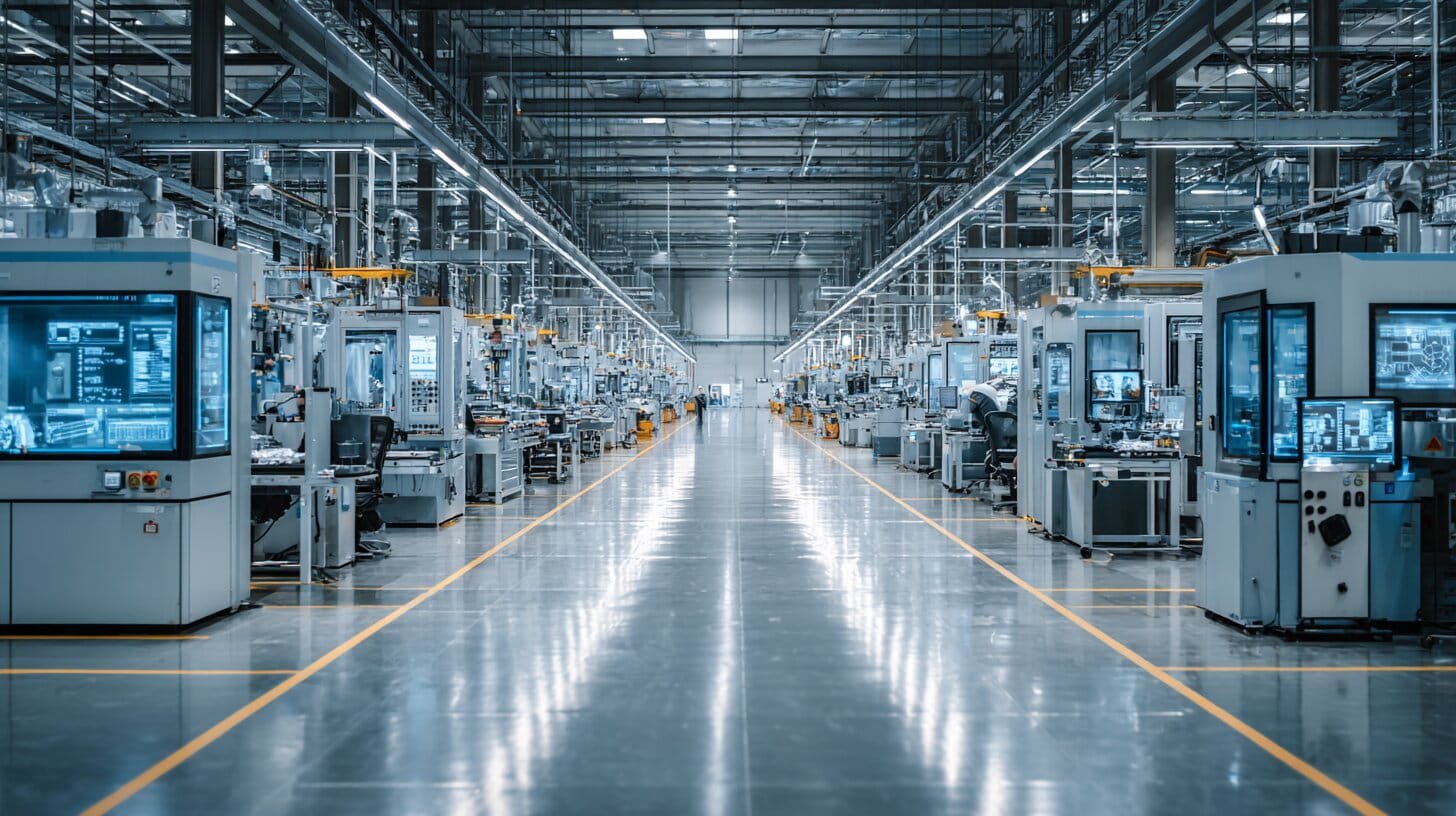
British manufacturing stands at a pivotal moment. The sector has emerged from years of uncertainty with renewed confidence. Output growth hit its strongest in 17 months during February 2026. Export orders reached a four-and-a-half year high. Yet the real story is not the recovery itself. It’s the transformation underway beneath the surface.
The government’s Industrial Strategy, published in late 2025, represents the most significant investment in UK manufacturing capability in decades. With £4.3 billion committed to Advanced Manufacturing over five years, and £2.8 billion specifically for R&D in automation, robotics, and smart factories, the direction is clear.
For manufacturing directors and operations managers, understanding what this means in practical terms is essential. This is not about distant policy. These programmes will shape technology adoption, workforce development, and competitive positioning over the coming decade. The shift toward next generation manufacturing UK is already underway.
The Three Pillars of Next Generation Manufacturing
Speaking at the Make UK National Manufacturing Conference this month, Business Secretary Peter Kyle outlined the government’s framework. The approach centres on three interconnected pillars: conception, production, and utilisation.
Conception: Where Value Is Created
The factory of the future begins not on the shop floor but on a high-performance computer. AI, digital twins, advanced simulation, and data-driven engineering are transforming how products are designed. This happens long before physical production begins.
UK manufacturers already demonstrate leadership here. Rolls-Royce pioneers digital twin technology in aerospace. They create virtual replicas of jet engines that can be tested and optimised without costly physical prototypes. BAE Systems integrates advanced modelling and AI into defence platforms. The commercial advantage lies in capturing value at the design stage.
For mid-sized manufacturers, the implication is clear. Investment in simulation software, digital twin capabilities, and AI-assisted design is no longer optional. It’s essential for those competing at the higher end of the value chain.
Production: The Smart Factory Imperative
The second pillar addresses how products are made. The comparison with global competitors is sobering. UK manufacturing robotics density sits at roughly 101 industrial robots per 10,000 workers. This is the lowest among G7 nations. Germany operates at 415, Japan at 397. South Korea leads the world at over 1,000 robots per 10,000 employees.
Closing this gap is a strategic priority. The Industrial Strategy commits £40 million for a new UK-wide network of Robotics Adoption Hubs. These hubs give manufacturers access to expertise, equipment, and connections needed to accelerate automation.
The Made Smarter Adoption programme has reached over 4,000 manufacturing SMEs since 2018. It’s now expanding nationally. Up to £99 million from 2026 will support 5,500 more SMEs. The programme covers robotics, AI, 3D printing, and autonomous systems. For details on broader policy context, see The UK Advanced Manufacturing Sector Plan.
The evidence is compelling. A Cambridge Industrial Innovation Policy study found that 97% of firms adopting digital technologies through Made Smarter reported tangible benefits. These include improved efficiency and reduced costs.
Utilisation: Manufacturing as a Service
The third pillar recognises that modern manufacturing increasingly involves selling solutions rather than just shipping products. An aircraft engine today is not merely sold as hardware. It’s sold as “power by the hour.” This service model monitors performance digitally. Maintenance becomes predictive rather than reactive.
This combination of advanced engineering and digital service provision is where profits are increasingly made. The government has committed to aligning trade policy, export finance, and diplomatic engagement with UK manufacturing strengths.
The True Scale of UK Manufacturing
A new report from Cambridge Industrial Innovation Policy provides fresh perspective. When measured beyond standard statistics to include the wider value chain, manufacturing contributed an estimated £331 billion to the UK economy. It supported approximately 4.3 million jobs in 2022.
The report highlights the growing integration of services within manufacturing. This is not a sector in decline. It’s a sector in transformation. The relatively modest headline figures reflect a smaller industrial base and weaker supply chain links, not statistical undercounting.
For manufacturers, this reinforces the importance of strengthening supply chain relationships. Developing service capabilities alongside core production is now essential.
The Skills Investment Challenge
Technology adoption without workforce capability is meaningless. The Industrial Strategy acknowledges this with over £1 billion pledged in skills packages. These are designed to create a talent pipeline for pivotal industries.
The challenge is significant. Make UK research shows 91% of manufacturers now agree they play a larger role in employee development. This is due to the scarcity of skilled labour. The sector faces acute shortages in CNC programming, data analytics, and more.
From April 2026, the Growth and Skills Levy will fund new short courses. These cover digital skills, AI, and engineering. They enable rapid upskilling without the multi-year commitment of traditional apprenticeships. Related reforms are reshaping how manufacturers access talent—see how recent apprenticeship reforms are changing the landscape.
The Manufacturing Technology Centre is expanding. MTC North Tyneside opens in 2026. It’s backed by £18.5 million and targets 6,500 workers for upskilling by 2029.
Business Secretary Kyle was direct: “The engineer of the future must be as comfortable with AI as with machinery. They must be as fluent in data as in design.” This isn’t just about operating new equipment. It’s about developing fundamentally different capabilities.
Digital Twins: From Visualisation to Optimisation
Digital twin manufacturing technology has evolved rapidly. It’s moved from static 3D models to dynamic, AI-augmented systems. These update continuously using live data. For manufacturers, applications span the entire product lifecycle.
In 2026, digital twins are increasingly used for simulation and what-if analysis. A manufacturer can test new configurations, optimise schedules, and predict maintenance needs. All without disrupting live operations. The technology enables complete virtual factories that validate processes before physical implementation.
The convergence of digital twins with analytics and real-time data represents the next frontier. Organisations establishing these capabilities early will hold significant competitive advantages.
The Made Smarter Model
The national roll-out of Made Smarter Adoption provides a practical pathway for SME manufacturers. The programme has expanded to all nine English regions in 2025-26. Scotland, Wales, and Northern Ireland are targeted from 2026-27.
The offering includes funded leadership programmes, digital roadmapping, and grant support. Crucially, it provides access to specialist advisers. These experts understand manufacturing contexts. They translate abstract technology concepts into operational reality.
For smaller manufacturers unsure where to begin, Made Smarter is a low-risk entry point. The Cambridge study shows participating firms overwhelmingly reported positive outcomes.
ARIA and the Robotics Frontier
The Advanced Research and Invention Agency (ARIA) is pursuing high-risk, high-reward projects. One priority is its £57 million Robot Dexterity programme. It aims to transform robotic capabilities and unlock major productivity gains.
Current industrial robots excel at repetitive, precisely defined tasks. They struggle with variability in many manufacturing processes. If ARIA succeeds in advancing robotic dexterity, the implications are transformative. Food processing to electronics assembly would all benefit.
This is long-horizon investment. But it signals government thinking. UK manufacturing robotics adoption isn’t just about current capabilities. It’s about positioning for a future where automation handles more activities.
Practical Steps for Manufacturing Leaders
Given the policy landscape, manufacturing directors and operations managers should consider several actions.
Assess your technology baseline. Where does your operation stand on the automation spectrum? What processes could benefit from robotics, digital twins, or AI-assisted optimisation? Understanding current state is prerequisite to a coherent digital strategy.
Engage with Made Smarter. The programme is designed for SMEs and provides funded support. Evidence shows participating firms overwhelmingly report benefits. There’s little downside to initial engagement.
Develop workforce capability plans. The skills gap won’t close itself. Identify roles requiring upskilling. Explore new short courses through the Growth and Skills Levy. Consider how apprenticeships can build your talent pipeline.
Explore Robotics Adoption Hubs. As the new network becomes operational, it will provide equipment and expertise. Early engagement positions you to benefit as capacity comes online.
Review your service proposition. Are there opportunities beyond product sales? Predictive maintenance, remote monitoring, and performance contracts are increasingly common.
The Competitive Imperative
The UK’s decision to invest in next generation manufacturing UK capabilities is not made in isolation. The EU is investing significantly in semiconductor resilience. The US has passed landmark legislation to onshore supply chains. East Asian economies lead in robotics density.
As Business Secretary Kyle noted: “The question is not whether this transformation will occur. It is whether Britain will shape it, or be shaped by it.”
For individual manufacturers, the equation is similar. The sector is transforming. Those who invest in automation, develop digital capabilities, and build skilled workforces will capture value. Those who don’t will compete on cost against producers with structural advantages.
The policy framework and funding for next generation manufacturing UK are now in place. The opportunity is clear. What remains is execution.
Continue the conversation in the LeanIQ Hub
A unified intelligence platform for UK manufacturing and industrial professionals. From aerospace to automotive, supply chain to skills: curated news, verified peer discussion, and supplier discovery in one place.
Start Exploring